EMDR Therapy
Eye Movement Desensitization and Reprocessing

What is EMDR?
By Steve B. Reed, LPC, LMSW, LMFT
EMDR may be one of the most effective treatments developed in years.
It provides "a way for people to free themselves from destructive memories and it seems to work, even in cases where years of
conventional therapy have failed." – Hugh Downs, 20/20, ABC News

By Steve Reed at the Psychotherapy Center
Eye Movement Desensitization and Reprocessing (EMDR Therapy) is a therapeutic technique developed by Francine Shapiro, Ph.D. in 1987. The method was originated by Dr. Shapiro when she noted that disturbing thoughts suddenly disappeared after engaging in a particular type of eye movement. As she deliberately retrieved the disturbing thoughts, they were no longer upsetting to her. This positive effect prompted her to retrieve other disturbing images, engage in the eye movements, and note the result. Upon discovering that a variety of disturbing thoughts and images were no longer
upsetting to her, Dr. Shapiro, began a study to note the effects with others.
Since 1987 this methodology has evolved into a multifaceted approach to treat a variety of different problems with a wide number of populations. EMDR is frequently used in the treatment of painful experiences and the disturbing feelings and thoughts that accompany high impact events. Additional uses include resolution of grief, anxiety, panic, phobias, relief from chronic pain, performance enhancement, and dealing with any unpleasant memory.
How Does the Treatment Work?
The procedure of EMDR treatment involves the client focusing on a disturbing image while the trained therapist facilitates a type of eye movement by having the client follow the movement of the therapist's fingers or a row of lights across their field of vision.
Upsetting images are physiologically and neurologically arousing and this can interfere with the processing of the information in the brain. Consequently, the experience gets misplaced or frozen in our nervous system. The effect of high impact events on the brain is like having a traffic police officer in your brain which gets very tired and sends the distressing signal to an unauthorized parking zone where it gets stored in the wrong area. EMDR retrieves the signal and parks it in the authorized zone.
Researchers do not know why (EMDR Therapy) Eye Movement Desensitization and Reprocessing works. The similarities of the eye movement patterns and Rapid Eye Movement (REM) sleep have contributed to theorizing a connection between the two. Information is processed when dreaming occurs. Dreaming occurs in the stage of sleep known as REM sleep. When the client accesses the disturbing image and thought that accompanies the image while moving their eyes back and forth, the information seems to be processing at an accelerated rate.
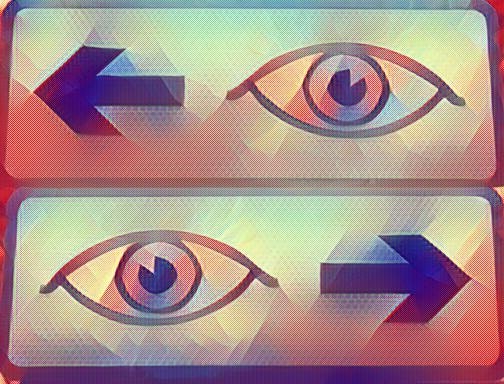
With EMDR (Eye Movement Desensitization and Reprocessing), feelings of tension are usually significantly reduced, the image seems to change by fading or becoming more distant, and the power of the negative thoughts are often diminished.
How Does It Help People Heal?
Eye Movement Desensitization and Reprocessing makes the following assumptions about healing:
1. EMDR therapy uncovers hidden aspects of problems.
2. EMDR therapy gets you unstuck and allows a natural movement toward healing.
3. EMDR therapy generates a new perspective on your problem.
4. EMDR therapy allows you to go directly to your healing destination and eliminate incorrect pathways.
5. EMDR therapy creates new pathways beyond the limitations of your previous route.
6. EMDR therapy accesses the natural healing abilities of your deeper self.
7. EMDR therapy enables your ability to let go.
8. EMDR therapy installs positive behaviors and allows you to connect to useful resources within yourself.
The research on EMDR therapy has indicated that the effects remain stable over time.
Who Does the Treatment Help?
Research on Eye Movement Desensitization and Reprocessing has reported the following positive therapeutic results:
- Combat veterans who were not able to be free of symptoms no longer experience flashbacks, or nightmares.
- People with phobias revealed a rapid reduction of fear and symptoms.
- People with panic disorder reported recovering at a more rapid rate when compared to other treatment methods.
- Crime survivors and police officers were no longer disturbed by the after-effects of violent assaults.
- People have been relieved of excessive grief due to the loss of a loved one.
- Children have been symptom-free from the effects of assault or natural disaster.
- Sexual assault survivors were able to lead normal lives and have intimate relationships.
- Accident and burn survivors who were debilitated are now able to resume productive lives.
- Those with sexual dysfunction are now able to maintain healthy sexual relationships.
- Clients with a wide variety of overwhelming events experienced relief from their symptoms with EMDR.
- People with stress and anxiety feel an easing of symptoms as the sympathetic nervous system is calmed.
What is an Example of EMDR Therapy? – Phobia Relief Case Study:
Treatment Issue
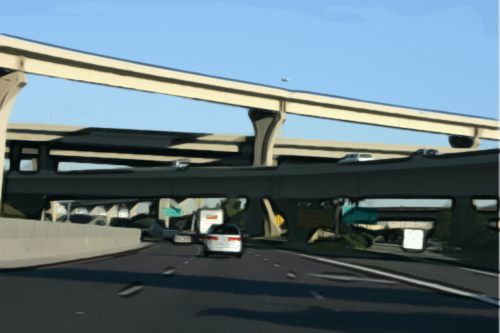
Alice began to have a fear of driving after experiencing a panic attack while driving on a highway. As a result, she experienced panic symptoms any time she got on the highway or when driving over bridges. This caused her to avoid highways in an attempt to regulate her anxiety. Fortunately, she was still able to drive comfortably on regular city streets. However, having to take side streets was slow and inconvenient. It meant that she spent extra hours of needless time driving just to avoid highways. She needed an effective treatment such as EMDR Therapy.
Alice reached out for help to get over her driving phobia. I let her know that the first step was to treat the panic attack that she had on the freeway. I explained to her how EMDR is a useful tool to help with this part of her therapy. After she understood the mechanics of EMDR, we identified the specific details of the event that we going to desensitize with EMDR.
Background
She was going through a very stressful time. Her husband of 15 years was divorcing her. She had no job and had not worked since her mid-twenties. Furthermore, she was raising her 10-year old son and 12-year old daughter. Her only income was what her husband was giving her and he was inconsistent with support. Her stress level had never been so high.
One day, she was taking her children to an activity. As they were en route on the freeway, other cars were driving overly fast and tailgating her. She hit a breaking point and started to feel panicky. At that moment, she felt compelled to pull over to the side of the road and stop. Feeling trapped, she got out of the car. As the cars speeded by at 70 miles per hour just a few feet away, she had a full panic attack. She said that if her children had not been in the car, she could not have gotten back in to drive. Alice struggled to get to the next exit and had not been on a freeway since. She needed EMDR therapy for anxiety, panic, and phobias.

EMDR Therapy Session 1
I asked her to hold her head still and to let her eyes follow a row of lights back and forth. For about 30 seconds her eyes tracked the lights while she reviewed the memory of her panic attack that day on the highway. After the lights stopped, she was physically shaking. I asked her to report what she got in touch with. Alice said,
- “I don’t understand this.” She began crying.
I asked her to focus on those sensations and emotions and follow the lights for another 30-second set of bilateral eye movements. Afterward, she said,
- “Something is pushing me, making me go too fast.”
At the end of the next set of eye movements, she reported,
- “He’s making me and I’m driving.”
Alice focused on that thought during the next eye movement sequence. Afterward, she said,
- “I don’t want to do it!” (She wept deeply.) “I have sensations of pain in my chest, around my heart. It hurts. Deep down, I really didn’t want a divorce. I was pushed out, like out of a moving bus.”
I asked her to focus on that during the next set of eye movements. After the lights stopped, I noticed that she was shaking a lot less. She said,
- “OK, I’m out here all alone—lost.”
Shifting from Feeling Like a Victim to Being Angry
During the next set of eye movements, Alice began to shake more. When the lights stopped she said,
- “I felt anger in my upper chest. You’ve done this to me but I’m going to make it. I’m driving down the road and nothing is the same, but I’ll go forward. I can drive whatever this is but I’m angry.”
After another set of eye movements, she stated,
- “I feel like saying to him you jerk, as hard as you’ve tried to pull me down, I’m going to make it.”
During the following set of eye movements, Alice seemed more noticeably angry and said,
- “This time I’m thinking of him as a slimy pig. I’ll make it on my own.”
When the lights stopped after the next eye movement sequence, she yelled,
- “You old ______ ______, I am going to make it where ever, whenever, and however I want!”
Another set of eye movements and more anger.
- “You rotten ______ ______, you can’t control me anymore!”
After the last set of eye movements for the first EMDR session, she had an epiphany and said,
- “I don’t need you anymore; I’ll be responsible for myself.”
On a subjective stress scale of 0 to 10, Alice ranked her stress level at 7. This was down from the highest stress level of 10 when we started. This represented a 30% drop in how bad she felt about the event we had just treated with the rapid eye movement therapy.
On her way out she commented that,
“I now know it had nothing to do with the freeway that day. The truth is I was denying my feelings. I had lots of anger and fear of the future.”
EMDR Therapy Session 2
The next week, Alice came back for her second EMDR session for her fear of driving. In the session, we focused on two anxiety triggers associated with driving – high bridges and cars coming at her very fast. We started with high bridges.
During that first set of eye movements, she started shaking again and afterward said,
- “I’m having a panic sensation of going over the bridge.”
After the next set of eye movements, she said,
- “There is still a fear of what’s on the other side.”
This was symbolic of what was on the other side of her life after divorce.
During the next set of eye movements, she became tearful and said,
- “That’s where I was left off, in an unfamiliar place. I feel lost. I don’t know where I am.”
Shifting from Being a Victim to a Successful Future
When the lights stopped after her next rapid eye movement pattern, she said,
- “I have a sense that I’m going to make it. I can see the way. It’s going to be OK.”
This was representative of a positive shift. She started seeing a more positive future. After the next eye movement set she reported,
- “It feels like I made it over. There are people I know and I am familiar with. There are lights and places to go to.”
After another set of rapid eye movement therapy, she said,
- “There is a sense of loss but I want to join in, laugh, and have fun.”
At this point in treatment, we shifted our focus to the other anxiety trigger – cars coming upon her quickly. After the 7th set of eye movements in this session, she said,
- “The cars are all around me. I can’t get out. It is like I feel out of control in my life.”
Here again, Alice draws a parallel between her fear of driving and her fear of her life after divorce.
Shifting from Disempowered to Empowered
After the next set of eye movements, she quickly shifts from a feeling of fear into assertiveness.
- “Just roll down the window and signal them to go on. I’m not going to let them treat me this way.”
After the 9th set of bilateral eye movements treatment, she became quiet and reflective and then said,
- “During the divorce, he would scream at me in public places. I felt shame.”
After the next set of eye movements, Alice returned to feeling assertive and said,
- “All of my life I’ve tried to please everybody else. I don’t have to.”
One final set of rapid eye movement therapy and Alice concluded by saying,
- “I see trees, lots of flowers, birds—it’s a relaxing drive. I see driving as completely separate from my divorce now.”
When I asked Alice to rank the stress level she now felt when thinking about her panic attack on the freeway, she reported that it was down to a level 1. Her panic attack memory was desensitized. She was now ready to begin the exposure therapy portion of her driving phobia treatment. EMDR made that part of her therapy go much faster and more easily. She quickly returned to feeling comfortable on highways, bridges, and being around fast-moving cars. She also made rapid progress taking control of her life after divorce. Finally, she returned to work and successfully raised her children.
EMDR Therapy Near Me – EMDR Online
Phone, video, or in-office appointments are available for EMDR treatment.
For help with EMDR, contact Steve at 972-997-9955 to schedule an appointment.
Steve Reed, a Dallas EMDR therapist, is available for an office appointment for your counseling and psychotherapy needs in the Dallas, Fort Worth, DFW metroplex, including Addison, Allen, Arlington, Bedford, Carrollton, Colleyville, Denton, Euless, Fairview, Flower Mound, Frisco, Garland, Grand Prairie, Grapevine, Highland Park, Hurst, Irving, Keller, Lake Highlands, Lewisville, McKinney, Mesquite, Murphy, Plano, Richardson, Rockwall, Rowlett, South Lake, University Park, and Wylie. He provides therapy at his office in Richardson, TX, and online to people throughout the USA.


